About Me

Wednesday, April 27, 2011

The Hijab: Why Some Wear it and Some Don't

In Malaysia, which is predominantly Muslim, some women wear the hijab, a head scarf that shows the face but covers the hair, ears and neck. And some do not. A new documentary, “Siapa Aku?” or “Who Am I?” by Norhayati Kaprawi, a young Muslim woman, explores the reasons why.
“I am passionate about women’s issues,” says Ms. Norhayati, who herself once wore the hijab but no longer does. Her first documentary, “Mencari Kartika” (“In Search of Kartika”), told the story of Kartika Shukarno, a young Malaysian Muslim woman sentenced by a religious court to six strokes of the cane and a fine for drinking beer in a hotel bar. A day before the caning was due to be carried out last April, the sentence was commuted to community service.
In her new documentary, Ms. Norhayati interviews Muslim women — young and old, urban and rural — in Malaysia, as well as religious scholars and celebrities in Kuala Lumpur and Indonesia about the hijab, also called the tudung.
The pressure to wear one is a dominant theme: “I think this conformity is the most dominating factor on why women in Malaysia wear a tudung,” Shamsul Amri Bahruddin, director of the Institute of Ethnic Studies at the National University of Malaysia, tells Ms. Norhhayati, adding that those who don’t can expect to hear from the lady next door every day, saying “you will go to hell or your hair will be burnt in hell.” Often, he adds, the women don’t understand the Quranic verses surrounding the reason for the hijab.
Indeed, at times it seems wearing it has little to do with religion. Nik Aziz Nik Hassan, former head of the Dakwa (missionary) department at National University of Malaysia, tells Ms. Norhayati, “In the late 1960s, Nik Mohamad Salleh, the son of a Kelantanese mufti (Islamic scholar)… was really against the imposition of tudung on Malay women. However he was not against the wearing of tudung. It is up to women’s own taste and style…. He opposed the claim that women who do not wear tudung are not faithful Muslims and are un-Islamic.”
“This documentary is not aimed at discouraging Muslim women from wearing the hijab,” says Ms. Norhayati, who adds, “This issue is so big…the hijab issue has been there for years.”
The 50-minute film, which is in the local Malay language with English subtitles, presents scenes of Muslim women wearing the hijab at weddings and scenes of Muslim women dancing without the hijab, with their hair showing. There’s also one scene of Muslim men wearing the hijab — as a sales gimmick. They are hijab sellers on Kuala Lumpur’s famous Masjid Jamek street.
“I want to see the response, especially from the Muslim community,” says Ms. Norhayati. She talked to Scene about wearing the hijab and why she turned the issue into a film.
Q. Why did you do this documentary?
A. I decided to do this story because I am inspired by this trend: women taking off their hijab…. People will have an idea of what is actually going on in a Muslim woman’s life. They just see women wearing tudung and that’s it. But what happened? Why do they wear it? What are the challenges they face?
I know a lot of women wear it out of pressure. Especially in schools, they say it is compulsory.  The amount of pressure and harrassment the women go through …these voices, their voices are never highlighted. The women themselves are too afraid to talk about it in public.
The documentary also gives the history of the hijab phenomenon in Malaysia. When did the hijab become popular in Malaysia? Who popularized it? What organization popularized it? And how much of it is actually about religion?
Q.  Does Islam say it is compulsory to wear the hijab?
A. Opinions differ. Most mainstream ulemas (Muslim scholars) generally will say it iswajib (compulsory). I am highlighting [in the documentary that] there are actually differences of opinion, which I do believe  the mainstream media, especially the Malay print and TV, will never highlight. The difference [in opinion] is between the ulemas. In the 1950s, there was an ulema from the state of Kelantan, Nik Mohamad Salleh, who studied in Mecca. He was against the imposition of tudung on Muslim women…. Now the mainstream ulemas view that sort of opinion as  un-Islamic.
Q. You did not interview any ulemas in Malaysia for this documentary. Why?
A.  If anybody can tell me, “You can interview this ulema,” I will go.  I have asked around.
Where are the progressive ulemas?  That is why for this documentary I had to go to Jakarta.  Of course, there are many conservatives in Indonesia as well. But at least there are moderate voices as well as well as progressive voices.  Whereas in Malaysia, where are the progressive voices?
Q. You don’t wear the hijab. Why?
A. I used to wear the hijab. I wore it when I was 14 and I took it off in my 30s. I wore it because at that time…from what I read, I said, this is what a Muslim girl or woman should do, [it was the] right thing to do…. But as the years went by, I felt something was not right, especially when I was 17 years old.  I was already wearing tudung but a friend of mine did not wear the tudung. Almost every day boys [at a co-educational school] would put notes in her table insinuating she will go to hell for exposing her hair. She felt so pressured finally she wore [one]. It left me thinking: How come boys can do whatever they like, can wear whatever they like, yet they feel this higher ground, this higher moral authority to pressure girls?
Q.  How did your family react to that?
A. They did not comment.  I don’t know if they said anything behind my back. One of my sisters wore the hijab when she was working in the civil service. She was pressured to wear it. Once home, she took it off.
Q. What conclusions can you draw from the various interviews?
A. From this documentary, one of the main things that is quite obvious is that it seems the ulemas, their accomplishment is forcing women to wear hijab through whatever ways, either through mental pressure or emotional pressure. From my interviews they have not managed to educate the Muslim women about why they should cover up. [The women] don’t even know the verse in the Koran which says you must cover up. [The ulemas] don’t emphasize education…. You wear or you go to hell. It’s like a command.

source: WSJ 

On being an introvert

I came across this today 10 Myths about Introverts, when reading it a lot it made sense to me. I was told by my teacher in middle school that I was an introvert. But what does that mean? Am I programmed to be like this or can I change myself? Well actually introverts and extroverts are the way they are because of the way their brains functions and has to do with Dopamine.
it turns out that Introverts are people who are over-sensitive to Dopamine, so too much external stimulation overdoses and exhausts them. Conversely, Extroverts can’t get enough Dopamine, and they require Adrenaline for their brains to create it. Extroverts also have a shorter pathway and less blood-flow to the brain. The messages of an Extrovert’s nervous system mostly bypass the Broca’s area in the frontal lobe, which is where a large portion of contemplation takes place.

So if I am the way I am it's because of the way my brain was programmed. When people told me to stop thinking too much and stop being shy, well it wasn't my fault, God made me this way!

Here are the 10 myths about introverts:


Myth #1 – Introverts don’t like to talk.
This is not true. Introverts just don’t talk unless they have something to say. They hate small talk. Get an introvert talking about something they are interested in, and they won’t shut up for days.

Myth #2 – Introverts are shy.
Shyness has nothing to do with being an Introvert. Introverts are not necessarily afraid of people. What they need is a reason to interact. They don’t interact for the sake of interacting. If you want to talk to an Introvert, just start talking. Don’t worry about being polite.

Myth #3 – Introverts are rude.
Introverts often don’t see a reason for beating around the bush with social pleasantries. They want everyone to just be real and honest. Unfortunately, this is not acceptable in most settings, so Introverts can feel a lot of pressure to fit in, which they find exhausting.

Myth #4 – Introverts don’t like people.
On the contrary, Introverts intensely value the few friends they have. They can count their close friends on one hand. If you are lucky enough for an introvert to consider you a friend, you probably have a loyal ally for life. Once you have earned their respect as being a person of substance, you’re in.

Myth #5 – Introverts don’t like to go out in public.
Nonsense. Introverts just don’t like to go out in public FOR AS LONG. They also like to avoid the complications that are involved in public activities. They take in data and experiences very quickly, and as a result, don’t need to be there for long to “get it.” They’re ready to go home, recharge, and process it all. In fact, recharging is absolutely crucial for Introverts.

Myth #6 – Introverts always want to be alone.
Introverts are perfectly comfortable with their own thoughts. They think a lot. They daydream. They like to have problems to work on, puzzles to solve. But they can also get incredibly lonely if they don’t have anyone to share their discoveries with. They crave an authentic and sincere connection with ONE PERSON at a time.

Myth #7 – Introverts are weird.
Introverts are often individualists. They don’t follow the crowd. They’d prefer to be valued for their novel ways of living. They think for themselves and because of that, they often challenge the norm. They don’t make most decisions based on what is popular or trendy.

Myth #8 – Introverts are aloof nerds.
Introverts are people who primarily look inward, paying close attention to their thoughts and emotions. It’s not that they are incapable of paying attention to what is going on around them, it’s just that their inner world is much more stimulating and rewarding to them.

Myth #9 – Introverts don’t know how to relax and have fun.
Introverts typically relax at home or in nature, not in busy public places. Introverts are not thrill seekers and adrenaline junkies. If there is too much talking and noise going on, they shut down. Their brains are too sensitive to the neurotransmitter called Dopamine. Introverts and Extroverts have different dominant neuro-pathways. Just look it up.

Myth #10 – Introverts can fix themselves and become Extroverts.
A world without Introverts would be a world with few scientists, musicians, artists, poets, filmmakers, doctors, mathematicians, writers, and philosophers. That being said, there are still plenty of techniques an Extrovert can learn in order to interact with Introverts. (Yes, I reversed these two terms on purpose to show you how biased our society is.) Introverts cannot “fix themselves” and deserve respect for their natural temperament and contributions to the human race. In fact, one study (Silverman, 1986) showed that the percentage of Introverts increases with IQ. 

Saturday, March 26, 2011

Indian streets in an autorickshaw

View from a speeding autorickshaw at night in Lucknow, India.

One of my favorite thing to do in India is ride the autorickshaw, it's a great way to see the city for cheap and it can travel through small roads and alleys. The fare is usually small and there is often haggling involved but I tend not to haggle too much. Taking pictures at night from a speeding autorickshaw often leads to pleasant surprises and abstract compositions with light. 

A history of the veil by Newsweek

Here is an article by Newsweek on the veil, will provide my own commentary on it soon.

Seeing Clearly

Aside from the flag, no piece of cloth in history has been imbued with as much power to liberate and oppress, rally and divide as the veil. Throughout the Muslim world, women have donned the veil as a form of modesty, piousness and defiance, and thrown it off to express freedom, strength and protest. Muslim governments have legislated head covering as a sign of religiosity and banned it as an obstacle to secularism. For liberal Western societies, the debate over the higab --a scarf that covers the head but not the face--crystallizes a key modern dilemma: how to reconcile the commitment to protecting freedom of expression with the ideal of integration and social cohesion?
As traditional as it seems, the veil has gone through perhaps more radical changes in use than any other item of apparel. It has been embraced, banned, enforced and made optional, often in the same country within a matter of years. Indeed, throughout history its meaning has been shaped by the political and social forces at work. The only unchanging characteristic of the veil is that it serves as a universal sign of Islamic heritage--and that women resent being told what to do with it, either way. "When women are pressured to veil, they protest, and when they are forced to unveil, they protest," says Fadwa el-Guindi, an anthropology professor at the University of Qatar. "The veil becomes the symbol of liberation par excellence."
The veil did not always have religious connotations. Pre-Islam, it was worn by upper-class Arab women in the Byzantine and Persian empires, who covered their hair as a symbol of status. More and more elite women began adopting the veil in the seventh century as a way to distinguish themselves from the lower classes. As the Islamic empire spread, the value of modesty--stipulated in the Qur'an for men as well as women--merged with the social customs of the upper class, creating a correlation between the veil and Islamic faith. While the Qur'an does not mandate veiling for women, it does encourage the Prophet Muhammad's wives to cover their heads to separate themselves from the rest of the religious community. "When Islam became imperial, a lot of cultural baggage infiltrated Islamic society," says Haifaa Jawad, a senior lecturer in Middle Eastern studies at the University of Birmingham in England.
Continue reading the article.

Wednesday, March 9, 2011

Being yourself in a marriage

I recently read an article by Kristin Armstrong, former wife of Lance Armstrong. The article is all about her marriage to Lance and how along the way she lost herself. She writes how she was before she met her husband, working for a start up and living the independent life, doing those things that she wanted and living her life fully. However after she married Lance Armstrong those things slowly went away and she threw herself into being Lance's wife, doing those things that helped her husband in turn slowly giving up and forgetting about those things that were important to her. She writes that
"The problem is that when a young woman announces her engagement, everyone is quick to roll out the matrimonial red carpet by throwing showers and obsessing over wedding day plans. This helps a bride prepare for the reality of marriage about as much as nine months of baby showers and nursery decorating prepare a gestating woman for the awesome task of raising a child: not at all."

Kristin Armstrong explains that marriage "has the potential to erode the very fiber of your identity" as the wife slowly becomes the person who cares for everything of the husband and has to be willing to make more sacrifices. She fell into the often common problem of marriage for women and one that is often touted to show how marriage is a bad thing for women. I grew up in a traditional family with a stay at home mom and a working father, however I was never taught to be a wife that was to bend to my husband's lifestyle after marriage. I was taught to do those things that I want to do and is a reflection of my potential. As for getting married I did and chose a partner that would give me space to do what I want and also had similar ambitions and outlook in life. That is not to say that my husband is a mirror image of me, we have our differences but in the end we respect each other and encourage each other to do that which makes us happy. I did not have to give up doing those things that make me me. Similarly I don't ever tell my husband to give up a dream he has because of me I will be there to encourage and support him. This does not mean that we will lead two separate paths, there is always some give and take so that we can be together but never at the expense of each others happiness. Kirstin writes that if she were to do it over again, she would not have completely given up those things that make her and define her. As women we do not have to sacrifice our identity for our husband to make a marriage work, by doing that we only make it worse for ourself and also for our husband, as he thinks that we are doing it out of our own volition. In a marriage it's important to assert your own worth and identity and to let the other know when something bothers you or when you are not happy. A marriage really thrives well with good communication, and expressing feelings. A healthy marriage should be equal and loving for both individual, not one sided.


Tuesday, March 8, 2011

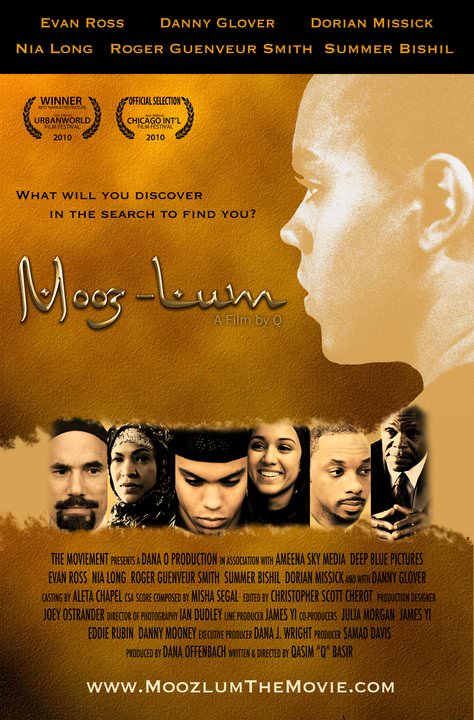
Mooz-lum, a fresh portrayal of Muslims


According to a recent study put out by the Pew Research Center's Project for Excellence in Journalism and the Pew Forum on Religion & Public Life, Islam dominated the headlines for 2010. While this might appear to be a good thing, most of the news involved the rising antagonism towards Muslims. From the controversy over the planned community center by an Islamic group near Ground Zero to the Qur'an burning that was to be held by a pastor in Florida, many wonder whether there is any good positive and accurate portrayal of Muslim. Well let me tell you that there is one that has just come out and is a must watch by all, whether Muslim or not. It's a film by director and producer Qasim Basir titled Mooz-lum. The film's alludes to the mispronunciation which is often derogatory of “Muslim” by many Americans. The film centers on the character of Tariq Mahdi, a young Muslim who is starting college and trying to come to terms with his relationship with Islam. Tariq grew up in a strict Muslim household, with a strict father who wanted him to become a scholar of the Qur'an. When he starts college he wants to distance himself from his faith due to his bad experience with Islam as a young child. The film takes place a few days before September 11, 2001 with flashbacks to Tariq's life growing up with divorced parents, a very strict father, ridicule from his classmate, and his scarring training at a religious school. It is the day of September 11 that marks a turning point in Tariq’s life as well as the lives of Muslims. While the main focus is on the personal struggle of Tariq and his relationship with his family and faith, the movie also shows the struggle that Muslims face in America. On September 11, the Muslim students are fearful of their lives and are even attacked by other students who are venting their frustration of what happened in New York onto the Muslims around them. What I liked most about this movie was the accurate portrayal, from the diversity of the Muslim community to the challenges of college life for Muslim students to family life; all of it was so real and not contrived. When Tariq is embarrassed to say his name or tell more about his religion in school and college I could relate to it. He faces problems which all young Muslims can relate to such as drinking at a party. Additionally, the director presents one of the strongest portrayals of Muslim women in recent films. The Muslim women are not singular entities without a voice; rather, they are diverse and vocal. Tariq's mother is a very strong personality and is not afraid to speak her mind to her husband or to anyone else in the film. Tariq's sister and the other Muslim women are very sure of themselves and do not bow down to what others think of their religion or their dress. I highly recommend this movie to all, whatever your faith happens to be. In this time when there is negative portrayal, Mooz-lum humanizes Muslims and shows a fresh new perspective that is real. Mooz-lum is now playing in select AMC theaters in select cities.